
Halal food is one of the clearest examples of demand running ahead of supply in American restaurants. Diners look for it specifically, search for it by name, and travel for it — and in most categories they are still choosing between a handful of independents and a few chains that are halal in some locations but not others.
That gap is why halal franchising has become a serious question for investors rather than a niche one. Fully halal franchises like Crimson Coward — 100% halal certified at every location, on every item — are still the exception rather than the rule. This guide covers what makes a franchise genuinely halal, what to check before you sign anything, and where a fully halal concept has an advantage.
What makes a franchise halal
“Halal” describes how food is sourced, slaughtered, handled and prepared. For a franchise, the part that matters commercially is scope — how much of the business the standard actually covers. In practice, brands fall into three groups:
- Halal at every location, on every item. The customer never has to ask. The brand can say so plainly in its marketing, and every store benefits from it.
- Halal at some locations. Usually where an individual franchisee chose a halal supplier. Customers have to check store by store, and the brand cannot market the claim nationally.
- Some halal items. Part of the menu qualifies and part does not, which puts the burden of checking on the guest and limits group orders and catering.
Those three look similar in a brochure and behave completely differently in a market. The first can be advertised. The other two come with an asterisk, and an asterisk is hard to build a reputation on.
Six questions to ask before you buy a halal franchise
- Who certifies the food, and how often is it audited? Ask for the certifying body by name and the certification cycle, not a general assurance.
- Does certification cover every location? Or does each franchisee arrange their own? This single answer determines whether you can advertise the claim.
- Does it cover the entire menu? Sides, sauces and non-chicken items included — and anything beef or dairy-adjacent in particular.
- How is the supply chain controlled? National supplier agreements hold the standard consistently. Store-by-store sourcing does not.
- What happens in shared preparation areas? Fryers, oils and equipment matter to customers who take the standard seriously.
- Does the brand state it publicly? A brand that publishes its halal status is accountable to it. A brand that leaves it to staff to explain is not.
Any franchisor worth joining will answer all six without hesitation. Hesitation on question two or three is the one to pay attention to.
Why fully halal is a commercial advantage, not a limitation
The common assumption is that going halal narrows the customer base. It does the opposite, and the reason is simple arithmetic.
Customers who need halal will not eat at a restaurant that isn’t. Customers who don’t need halal are, overwhelmingly, not checking. So a fully halal restaurant can serve both groups, while a non-halal restaurant can only serve one. The same food, a wider market.
It also changes the kind of business you get. Halal diners tend to travel further, come in groups, order catering for events, and stay loyal once they trust a place — because trustworthy options are scarce enough to be worth keeping. For a franchisee, that shows up as group orders and repeat visits rather than one-time traffic.
Where halal franchising is growing fastest
Demand is strongest where the food is already something people queue for and the halal version is hard to find. Fried chicken and fast casual sit at the top of that list: high-frequency, group-friendly food in a category where most of the big names cannot make a national halal claim.
Geographically, the obvious markets are the metropolitan areas with large, established Muslim populations — but the more interesting opportunities are often the suburbs around them, where demand exists and nobody has opened yet.
Where Crimson Coward fits
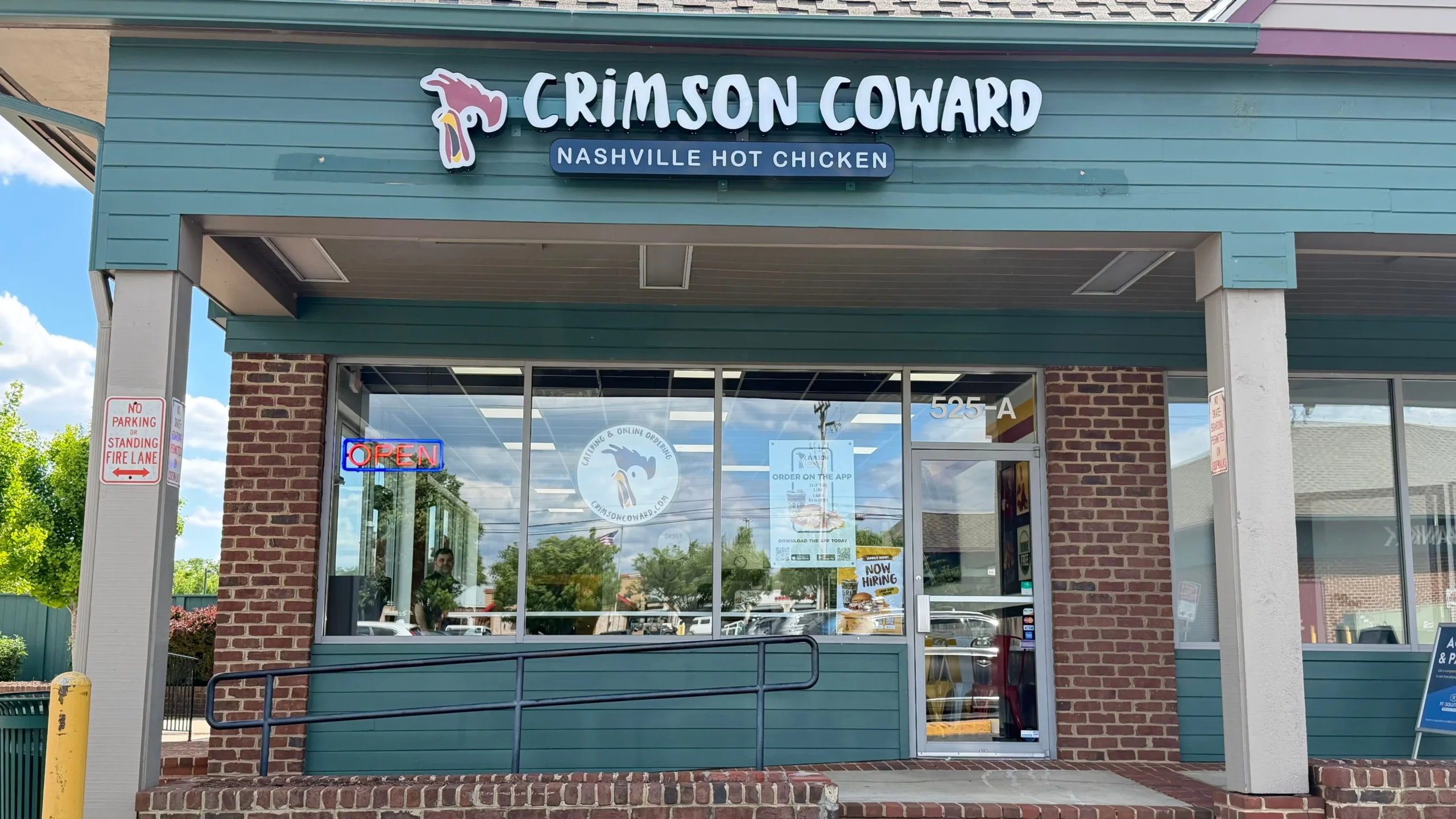
Crimson Coward is a Nashville hot chicken franchise that answers all six questions above the same way: 100% halal certified at every location, on every item, with no exceptions and nothing for a guest to verify.
Specifically, the chicken is zabiha, certified Zabiha Halal Poultry by Halal Transactions of Omaha, a member of the World Halal Food Council. The tasmiah is said by a Muslim in person at the time of slaughter, the birds are bled thoroughly before further processing, and the meat is never mixed with other meats or non-halal ingredients. Deliveries arrive with their own halal certificates — which is the kind of answer a franchisee can give a customer who asks, rather than a brand promise taken on trust.
The food is fresh, never-frozen chicken — non-GMO, raised without hormones or antibiotics, and sourced through a direct relationship with the farmer. The Crimson Rub goes on a full 24 hours before frying, and every order is cooked to the heat level the guest asks for, from Country (no heat) up to Burrrrn, Baby, Burn.
The brand has been serving hot chicken since 2019 and now runs 20+ locations across California, Texas, Washington, Virginia, Maryland and Delaware.
If you want the detail rather than the overview: the Crimson Coward franchise page covers the model, the support and the application, and we publish a separate breakdown of what a Nashville hot chicken franchise costs.
Frequently asked questions
What is a halal franchise?
A halal franchise is a franchised business whose food meets halal requirements. The important detail is scope: some brands are halal at every location and on every item, while others are halal only at certain franchised locations, or only for certain menu items. Ask which one you are buying into, because it changes how you can market the restaurant.
Are halal franchises profitable?
Profitability depends on the brand, the site, the market and the operator, and no franchisor can promise results. What a halal concept does offer is a clearly defined audience that actively searches for halal food, alongside mainstream customers who are not filtering for it at all. Any financial performance information must come from the franchisor’s Franchise Disclosure Document.
What should I check before buying a halal franchise?
Confirm who certifies the food and how often; whether certification covers every location and the whole menu; how the supply chain is controlled; whether preparation areas are shared; and whether the brand states its halal status publicly rather than leaving customers to ask.
Is a halal franchise only for Muslim customers?
No. Halal chicken is ordinary chicken prepared to a particular standard, and most customers at a halal restaurant are not choosing it for religious reasons. The practical effect is that a fully halal restaurant can serve everyone, while a non-halal one cannot serve part of the market.
Is Crimson Coward a halal franchise?
Yes. Crimson Coward is a Nashville hot chicken franchise that is 100% halal certified at every location, on every item, with no exceptions and no per-store checking. The chicken is zabiha, certified Zabiha Halal Poultry by Halal Transactions of Omaha, a member of the World Halal Food Council.
How do I find out if a territory is available?
Territory availability varies by market. Send an enquiry through the Crimson Coward franchise page with your preferred state and the franchise team will tell you what is open.
Territory availability varies by market. Tell us where you are looking and the franchise team will come back to you with what’s open.